


Discovering our Ingredients
Updated: Feb 23
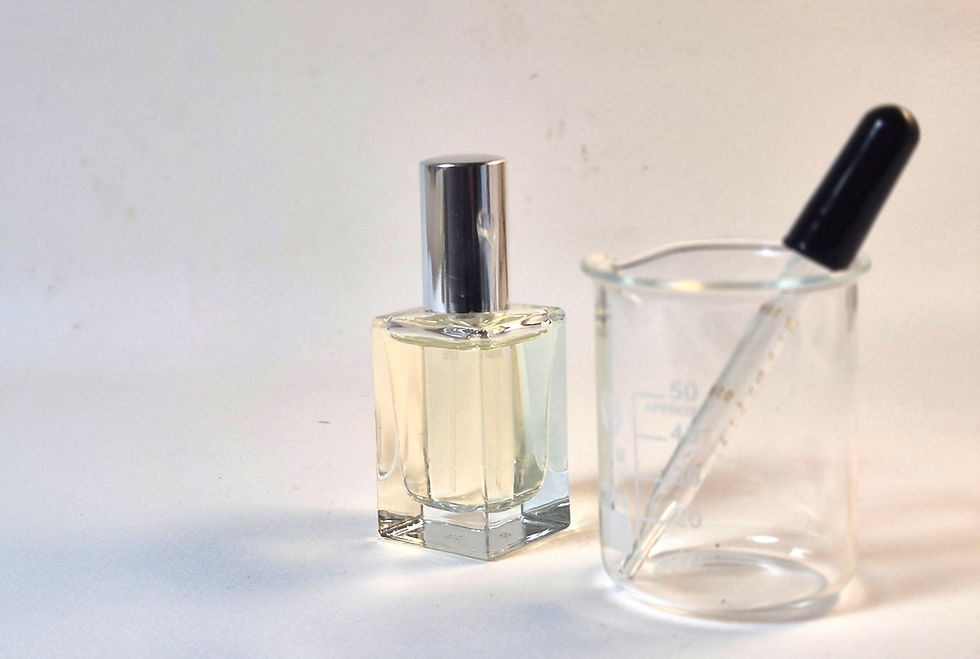
When it comes to personal expression, few things are as powerful as scent. A fragrance can evoke memories, create moods, and even influence how others perceive us. But what are they made from?
Most of us understand the need for essential oils, extracts and absolutes, but what else goes in our perfumes, and why?
The Art of Crafting Perfumes
Creating a perfume is a study in practice and patience. It requires a blend of creativity, skill, and a deep understanding of the materials involved. At Entropy Olfactory, each fragrance is handcrafted, ensuring that every bottle is unique.
The process begins with selecting high-quality ingredients. These can include essential oils, absolutes, and aroma compounds. Some common ingredients you might find in their perfumes include:
Essential Oils: Extracted from plants, these oils provide the base for many fragrances.
Absolutes: These are highly concentrated plant extracts that offer rich and complex scents.
Aroma Compounds: Synthetic ingredients that can mimic natural scents or create entirely new ones.
Whilst naturals oils (essentials and absolutes) are a joy to behold in and of themselves, they come with a lot of baggage and they are complete structures in themselves.
For example, bergamot is a staple of the perfumery industry. Her scent profile is citrus, floral, with a touch of green foliage and wood. She is gentle yet proud, she strikes you with her freshness and brightness, and seduces you with her smooth, sweet vibrancy. She is a scent I would be proud to wear all day, yet she arrives, dazzles and promptly exits. As a scent her presence is intoxicating yet fleeting; her molecules are the first to evaporate from the skin. Like most citrus scents, she is a top note and one of the first to disappear. And this is just the first issue.
The Ingredients Matter
As a perfumer, an ingredient needs to be in consistent supply. Bergamot is a fruit grown primarily in Italy, and while Italy can be relied on for long, summery days full of sunshine, it is not immune to the effects of drought, flooding, plant diseases, and many other factors that may affect the supply, quality and availability of the fruit.
A perfume must have ingredients whose scent profile are consistent and reliable. We must also consider their sustainability and the environmental impact of their intensive farming, their CO2 imprint in regards to production, processing and delivery and their longevity, storage and toxicity to the environment. Despite it's origins as a natural product, it is still proven to have a "considerable toxicological effect to aquatic life with long-lasting effects" (https://www.nhrorganicoils.com/uploads/20160524153119e_Bergamot_SDS.pdf)
Bergamot can also contain Bergapten, which is phototoxic, meaning that it can cause a reaction on the skin in direct sunlight, which has been linked to higher risk of carcinogenesis (causing cancer). The bergamot we use is bergapten-free, so no worries there!
And finally, the presence of limonene is also a factor in how we use bergamot; limonene can oxidise when in the air, when warmed and when in the sunlight. This causes chemical reactions in the oil and produces oxides and peroxides, which can considerably increase the risk of allergic reactions, as well as causing the oil to go rancid and significantly alter it's scent profile.
So there's a lot to think about with essential oils, absolutes and extracts. They contain long lists of ingredients (bergamot alone contains limonene, linalyl acetate, linalool, γ-terpinene and β-pinene, and in smaller quantities geranial and β-bisabolene amongst others).
Looking at non-naturals
When we look at non-naturals, i.e. laboratory-made chemicals and compounds, we strip those ingredients to their bare bones. We take the limonene, the linalyl acetate, the linalool, and we experiment with their abilities to create that bright citrus profile, and attempt to bend it to our will. Perhaps we want it to have the bitterness of a grapefruit, or the floral qualities of neroli, or the zing of lemon.
It is here that we truly begin to explore the subtleties of scent and, using olfactory bricks and mortar, build something from it's very foundation. And whilst the difficulties of managing naturals is quickly forgotten, the range and breadth of possibility in the aroma compound market is both breath-taking and intimidating in equal measure! Take a look for yourselves!
This is a small fraction of the ingredients list from just one manufacturer. There are four main companies, IFF, Firmenich, Symrise and Givaudan. These are the giants of industry, and their libraries go far beyond what you see here. Many creations are held behind closed doors, and are not for the likes of you and I. They are the suppliers and minds behind the last century's greatest scent creations from all the names you and I are familiar with.
Entropy Olfactory will never compete with these behemoths of industry, but we hope to sit alongside them and paddle furiously in their wake, perhaps ride in their inertia occasionally and bask in their reflected sunshine whilst avoiding any kind of phototoxic effects!

Release 1: Ingredients profiles
Zephyr
The simplest of the three, here we start with the main constituents of cucumber and pear; ethyl trans-2-cis-4-decadienoate and folione - the essence of what you smell from both fruits (yes cucumber is a fruit, it's seeds are internal). Whilst neither fruit produce an extract that has been traditionally used as an essential oil or absolute (cucumber is 96% water!), these lab-made chemicals impart the fresh, green cucumber and the gentle, fruity pear scent profiles of which we are all familiar.
They are supported with the gentle white floral of jasmine through benzyl acetate, linalool and jasmone amongst others, and grounded with a spicy addition of cardamom essential oil - its principal profile centring around limonene, myrcene and eucalyptol - it's citrus, spicey and camphoraceous qualities.
Morningstar
Morningstar contains more than 40 ingredients! And whilst it would be uninteresting to list everything here, some highlights would include several citrus essential oils including yuzu, grapefruit and bergamot in very small doses, and supported by their constituent parts (limonene, linalool, styralyl acetate) in addition. As the perfume has a more than normal percentage of limonene, to counteract it's oxidising properties (as discussed earlier), butylated hydroxytoluene is added as an anti-oxidant. This will keep the perfume stable (but still keep it at room temperature and out of direct sunlight at all times! Other ingredients may react with UV and spoil the scent, albeit safely)
Morningstar is supported with a number of woody heart notes including javanol, a chemical compound designed to imitate sandalwood. As you can easily find out online, sandalwood is a crushingly expensive ingredient, and Givaudan (one of the Big Four) produce this delicate remake that is at once safe to use in substantial quantities, more stable and environmentally friendly and (almost) equally rich in its scent profile.
It is grounded with the aid of several synthetic musks - the Perfume Society have a lovely little history lesson in musk - take a look! https://perfumesociety.org/ingredients-post/musk/
Silversmith
The call of the forest in winter; icy wind slicing it's way through the trees, whipping up soggy dead leaves, heavy mist on a frozen pond, muddy puddles and cracked ice. How does one re-create the feel of a walk in the forest around my home town in the Forest of Dean?
Petrichor, the earthy scent of rain after a dry spell (think of summer rain on your lawn), when bacteria in the earth produce geosmin, which is carried into the air by the rain vapours. We use geosmin in minute quatities, along with floralozone, one of those well-named synthetics that does exactly what it says on the tin! The crackly feel of a storm in the air, gentled by the softness of a winter floral.
Supported by szechuan pepper oil; eucalyptol, methyl cinnamate, terpineol amongst many others - look at the names, they give a lot away - giving a balsamic, woody citrus. Finished off with some coniferous essential oils (pine needle, juniper), the scent profile cuts with a silver knife, sharp and clean, yet still gives the comfort of quiet nature, safe in the surroundings of almost endless existence that transcends all our daily troubles.



Comments